
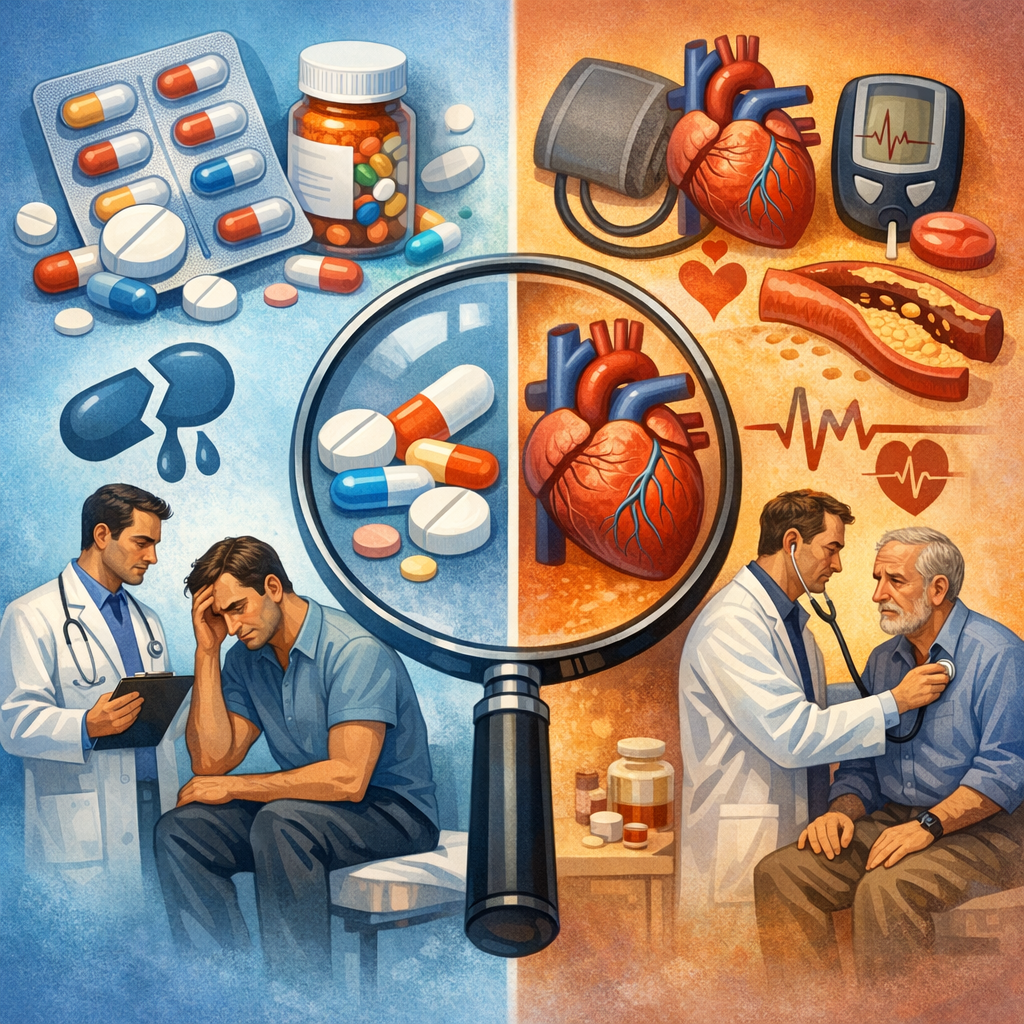
### Understanding Erectile Dysfunction: Medication Side Effects vs. Underlying Health Conditions
Erectile dysfunction (ED) is a common issue affecting over 30 million men in the United States alone, significantly impacting not only sexual health but also emotional well-being and intimate relationships. Determining the root cause of ED is crucial for effective treatment, often requiring a distinction between medication side effects and underlying health conditions.
### What is Erectile Dysfunction?
Erectile dysfunction, as defined by the National Institute of Diabetes and Digestive and Kidney Diseases, refers to the persistent inability to achieve or maintain an erection sufficient for satisfactory sexual performance. While occasional erectile difficulties are common, chronic ED often signals a more serious issue that demands medical attention.
### Exploring Common Causes of Erectile Dysfunction
ED can result from various causes, broadly categorized into physical and psychological factors. Physical causes include cardiovascular diseases, diabetes, hormonal imbalances, nerve damage, and certain medications. Psychological factors, such as stress, anxiety, and depression, also play significant roles. According to Dr. John Smith, a prominent urologist, “Understanding the underlying cause is vital for formulating an effective treatment plan.”
### The Role of Medications in Erectile Dysfunction
Several classes of medications, including antihypertensives, antidepressants, antipsychotics, and medications for benign prostatic hyperplasia, can result in erectile dysfunction as a side effect. These medications may impact sexual function by altering blood flow, hormone levels, or nerve function—elements crucial for achieving an erection. For more details on how specific medications might be affecting your ED, visit edrugstore.com.
### Distinguishing Medication-Induced ED from Health Condition-Induced ED
**Onset and Timing:** Medication-induced ED usually occurs shortly after starting a new medication or changing the dosage. In contrast, ED resulting from health conditions typically develops gradually as the condition progresses.
**Reversibility:** Discontinuing or adjusting the dose of the offending medication often resolves erectile difficulties. However, when ED is due to chronic health conditions, addressing the condition itself is necessary, and sometimes even then, the damage might remain irreversible.
**Symptom Patterns:** Medication-linked ED might coincide with medication intake and could improve with alternative medications yielding fewer sexual side effects. Symptoms related to underlying health conditions might correlate with other health changes, like increased blood sugar levels or blood pressure.
### Diagnostic Approaches to Identify the Cause of ED
**Comprehensive Medical History:** Clinicians review the patient’s overall health, family history, and all medications, focusing on changes in medication regimens. If you’re concerned about how your medication might affect you, see guidance on transitioning to medication with fewer sexual side effects at edrugstore.com.
**Physical Examination:** A thorough physical exam can uncover underlying issues such as hypertension, atherosclerosis, or hormonal imbalances that might contribute to ED.
**Laboratory Tests:** Blood tests measure testosterone levels, glucose levels, lipid profiles, and thyroid function to identify underlying health issues.
**Psychological Evaluation:** Since psychological factors can cause or worsen ED, a psychological evaluation is crucial when no clear physiological cause is apparent.
**Review of Side Effects:** Clinicians typically review the side effects of medications and consider alternatives if necessary, helping establish a correlation between ED onset and specific medications.
### Tailored Treatment Strategies for ED
**Medication Adjustments:** If a medication is identified as the cause of ED, clinicians may adjust the dose or switch medications. Such changes often alleviate symptoms.
**Managing Underlying Conditions:** Addressing the primary health condition involves complex and long-term treatments like lifestyle modifications for diabetes or hypertension management.
**Psycho-social Support:** Counseling and therapy may be recommended to address psychological factors, reduce stress, and manage anxiety or depression contributing to ED.
**Pharmacotherapy:** Depending on the cause, medications like PDE5 inhibitors (e.g., Viagra, Cialis) may be prescribed to enhance erectile function, alongside treating the underlying condition.
**Integrated Care:** A multidisciplinary approach involving cardiologists, endocrinologists, and mental health professionals is often optimal for addressing multifactorial cases of ED.
### Final Thoughts on Erectile Dysfunction Management
Erectile dysfunction is a complex problem with various potential causes. Clinicians play a vital role in discerning whether it arises from medications or health conditions. Through careful evaluation, comprehensive examination, and targeted treatments, they can effectively help patients regain sexual function and improve overall quality of life. Understanding nuances in ED diagnosis and treatment is critical, underscoring the importance of personalized medical care. If you suspect your ED might be medication-related or due to an underlying health condition, consult your healthcare provider for a detailed evaluation and tailored treatment plan.