
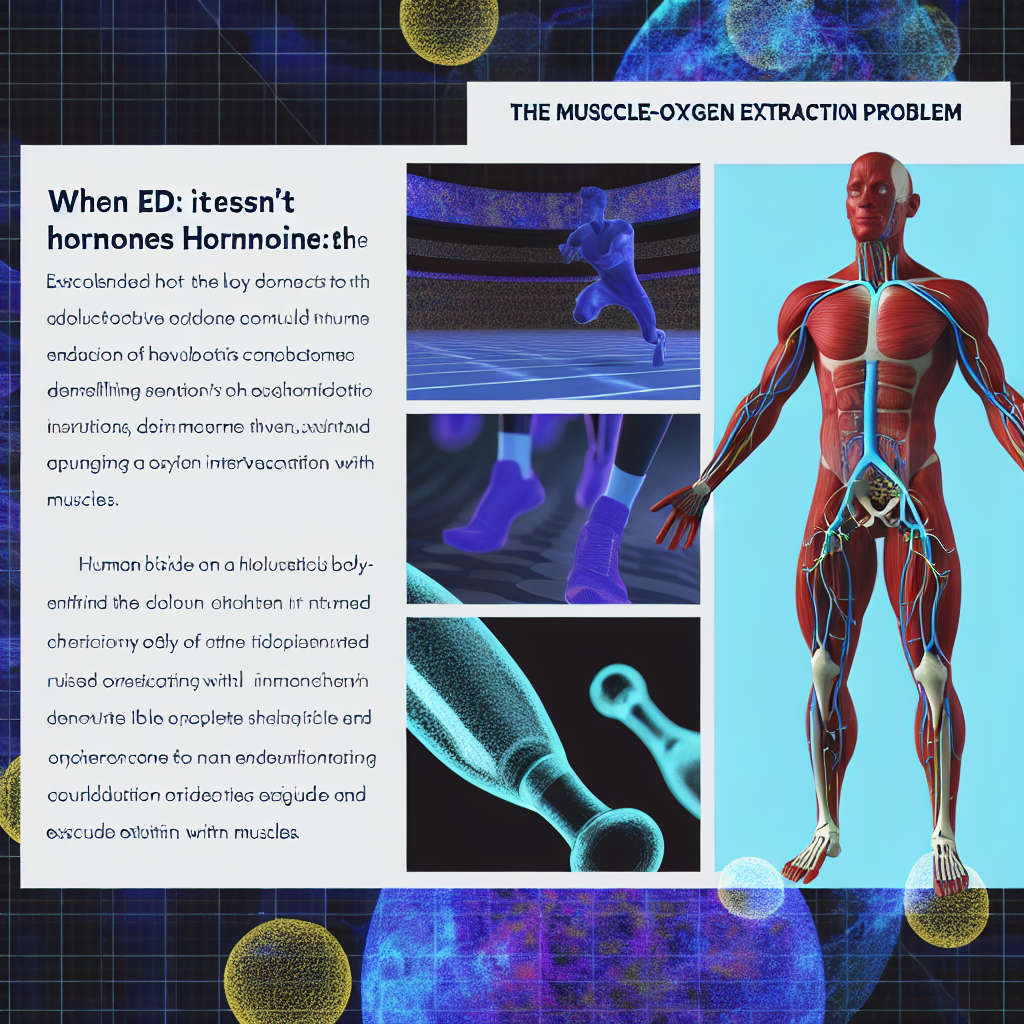
When ED Isn’t Hormones: The Muscle-Oxygen Extraction Problem
Understanding Erectile Dysfunction Beyond Hormones
When addressing erectile dysfunction, many assume it’s due to a hormonal decline—most often low testosterone. While low testosterone can impact sexual performance, it’s far from the only cause. In fact, studies suggest that around 25% of men experiencing ED have normal hormone levels, according to the Mayo Clinic.
One emerging explanation for ED involves a lesser-known issue: how efficiently the muscles extract and utilize oxygen. This goes beyond hormones and delves into how the body’s systems produce energy. As Dr. Andrew Huberman from Stanford University has noted, this problem may be more about systemic energy inefficiency than hormonal imbalances.
If your testosterone levels are normal and medications like Viagra aren’t producing results, muscle-oxygen extraction could be the missing link in your treatment journey.
What Is Muscle-Oxygen Extraction and Why It Matters
Muscle-oxygen extraction refers to the body’s ability to successfully transfer oxygen from your blood into the muscle cells—such as the smooth muscle tissue in the penis—where it helps generate cellular energy.
The process begins with oxygen transported by hemoglobin in red blood cells. From there, oxygen must pass through capillaries and into the tissues. More efficient oxygen delivery leads to better tissue function—which includes your body’s ability to achieve and maintain an erection.
Insufficient oxygen extraction can arise due to mitochondrial dysfunction, oxidative stress, or compromised circulation. This isn’t just a problem for athletes—it can affect anyone and manifest through symptoms like:
– Fatigue
– Poor workout recovery
– Cold extremities
– Lower libido
– Erectile dysfunction
A 2021 study in Frontiers in Physiology found that people with poor oxygen utilization exhibited a 30% reduction in vascular performance. Since sexual function heavily relies on vascular performance, the study helps clarify the link between oxygen efficiency and erectile health.
ED as an Indicator of Systemic Health Issues
ED is often viewed as a localized issue—but in truth, it can be one of the body’s earliest warnings of systemic problems, especially those related to cardiovascular health. Achieving and sustaining an erection involves two key elements:
– Blood flow to the penis
– The flexibility and responsiveness of penile muscles
Both mechanisms require a steady and sufficient supply of oxygen.
The smooth muscle tissue involved in erections needs to function in a similar way to cardiac muscle—it demands a continual oxygen supply for peak performance. According to Dr. Michael Lauer, a cardiologist at the National Institutes of Health, when oxygen supply drops, these muscles can’t sustain their function effectively.
Furthermore, low tissue oxygen is often associated with conditions like high blood pressure, diabetes, and heart disease. All of these significantly increase the likelihood of experiencing ED. This reinforces the understanding that erectile dysfunction can be a sign of broader cardiometabolic issues—not just a personal concern.
Put simply: If your muscles can’t utilize oxygen effectively, they won’t function well, and they certainly can’t retain blood long enough to support an erection.
When Traditional Treatments Don’t Work
Have medications like Viagra or testosterone therapy failed to improve your condition? You’re not alone. About 40% of men do not respond to PDE5 inhibitors like Viagra, according to Cleveland Clinic data. If you’re otherwise healthy and these therapies aren’t producing results, the underlying issue may be reduced efficiency in oxygen usage at the cellular level.
Even when nitric oxide pathways operate properly—essential for the effectiveness of ED medications—your cells still need adenosine triphosphate (ATP), the body’s primary energy molecule, to respond. Energy deficits with ED can stem from factors like mitochondrial dysfunction, a reduced VO₂ max, or subtle vascular issues.
Diagnostic tools such as VO₂ max testing, near-infrared spectroscopy, or even muscle biopsies can evaluate how efficiently your body converts oxygen into energy.
To put it in perspective: PDE5 inhibitors may open the pipes, but if your internal engine can’t burn the oxygen “fuel,” erections simply won’t occur.
Natural Strategies to Improve Oxygen Use and ED
The good news is that poor oxygen utilization can often be improved through lifestyle and dietary changes. Here are six evidence-supported approaches to enhance muscle-oxygen extraction and overall sexual performance:
1. Aerobic Exercise
Engaging in just 30 minutes of regular walking or cycling increases your capillary density and improves mitochondrial health. People who exercise regularly are 30% less likely to develop ED, according to Harvard Health.
2. High-Intensity Interval Training (HIIT)
Short, intense bursts of activity are shown to dramatically improve oxygen delivery and usage more quickly than steady-state cardio.
3. Mitochondrial Support via Nutrition
Include supplements like CoQ10, alpha-lipoic acid, carnitine, and magnesium in your diet. These compounds support ATP production and help mitochondria operate more efficiently.
4. Boost Blood Flow
Improve vascular function through techniques such as infrared saunas, supplementation with beetroot juice and L-citrulline, and simply staying well-hydrated.
5. Improve Insulin Sensitivity
High insulin levels damage vascular tissue. Reducing your intake of processed carbohydrates, managing stress, and ensuring adequate sleep can improve insulin resistance—and in turn, erectile function.
6. Breathing Techniques
Deep breathing exercises such as diaphragmatic breathing, yogic pranayama, or methods like the Wim Hof technique can enhance your body’s oxygen usage under stress.
A New Horizon in ED Treatment
Erectile dysfunction is increasingly being recognized not just as a hormonal, mental, or age-related challenge, but as a broader symptom of systemic issues. Often, it points to suboptimal oxygen delivery, cardiovascular inefficiency, or low metabolic flexibility.
By focusing on how your body processes and utilizes oxygen—from mitochondrial health to blood vessel performance—you may experience benefits that extend far beyond improved erections. These might include:
– Increased daily energy
– Improved endurance during physical activity
– Enhanced sexual function and performance
Today, more functional medicine clinics are including muscle-oxygen efficiency as part of their ED diagnostic workups. If conventional medical tests aren’t uncovering a cause for your symptoms, this avenue could provide much-needed answers.
The next step in ED treatment may not be in your hormones—but in your cells’ ability to breathe.
Final Thoughts: More Than Just a Mental Issue
If you’ve ruled out hormonal and psychological causes for your ED, don’t assume it’s hopeless. And don’t assume it’s “just in your head.”
In many cases, erectile dysfunction may be your body’s way of signaling distressed vascular and metabolic function. The real solution lies in optimizing how your body converts oxygen into energy.
Oxygen fuels life. For many men, it might also be the key to restoring renewed sexual confidence, performance, and overall vitality.
Sources and References
1. Mayo Clinic – Erectile Dysfunction: Risk Factors
2. National Institutes of Health – Dr. Michael Lauer on Erectile Function and Vascular Health
3. Harvard Health Publishing – Exercise Can Help Prevent ED
4. Frontiers in Physiology – Impaired Oxygen Utilization and Erectile Function
5. Cleveland Clinic – Understanding ED Treatment Options
6. Huberman Lab – Podcast Episode on Oxygen & Sexual Performance
📍Visit edrugstore.com to discover solutions for improving your performance using muscle-oxygen strategies.