
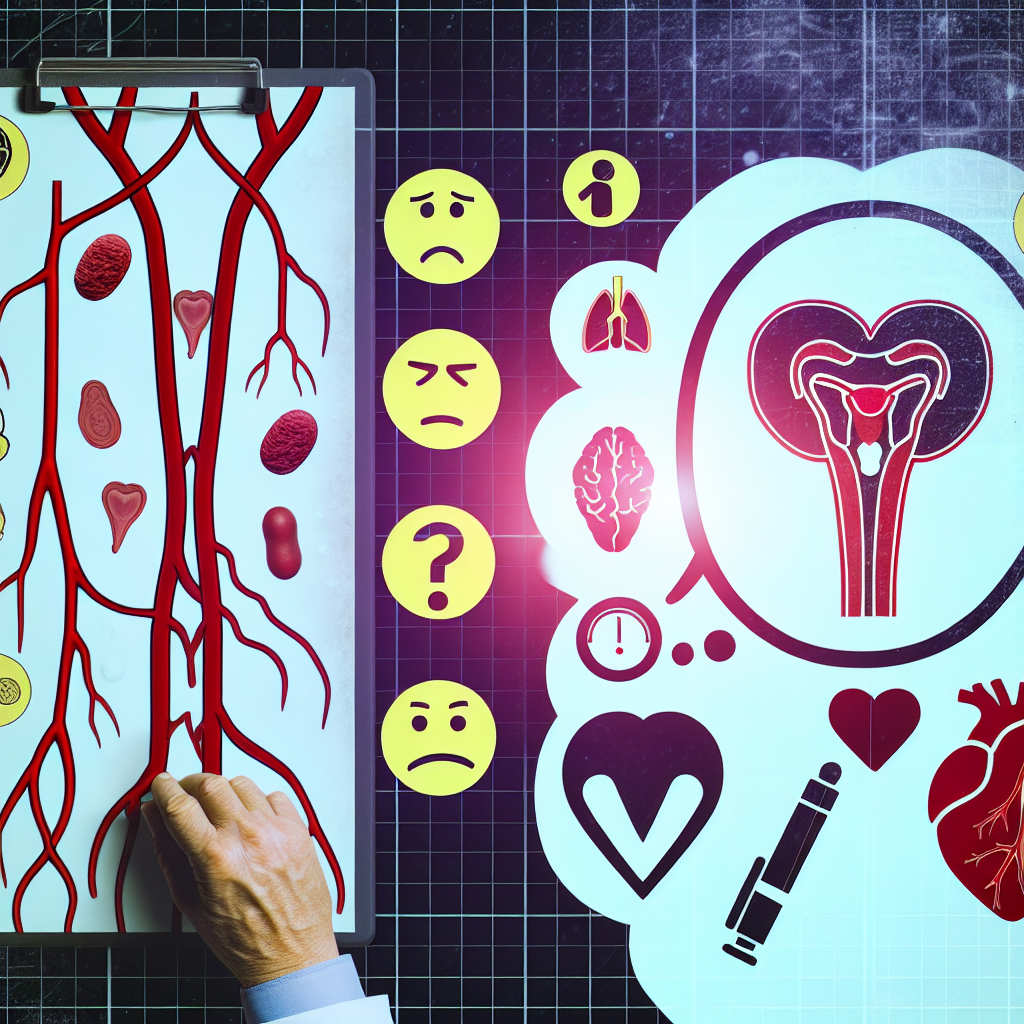
### Understanding the Complex Relationship Between Vascular Health and Erectile Dysfunction
Erectile dysfunction (ED) is a condition affecting approximately 30 million men in the United States, transcending age and cultural barriers, as noted by the American Urological Association. Medically defined as the inability to achieve or maintain an erection sufficient for satisfying sexual activity, ED often results from a combination of physical and mental factors. Recent research has highlighted the intricate relationship between vascular health and erectile dysfunction. Changes in vascular health can lead some healthcare providers to mistakenly attribute ED to psychological causes. This article explores these changes, explaining why such misdiagnoses occur and emphasizing the importance of thoroughly evaluating vascular health in men presenting with ED symptoms.
### The Interplay Between Vascular Health and Erectile Function
Understanding the link between vascular health and ED requires a basic grasp of how erections function. An erection is primarily a vascular event, reliant on abundant blood flow to the penile region. It begins with sexual arousal, which triggers the release of nitric oxide into blood vessels. This chemical causes them to expand, increasing blood flow to the penis. Consequently, any condition affecting the vascular system, such as high blood pressure or diabetes, can also impair erectile function.
Atherosclerosis, characterized by the thickening of arteries, is a common cause of restricted blood flow. It affects not only the heart but also restricts blood reaching the penis, frequently resulting in ED.
### How Fluctuations in Vascular Health Lead to Misdiagnosis
The subtle and temporary nature of changes in vascular health can complicate identifying the precise cause of ED. Dr. Michael S. Eisenberg, Assistant Professor of Urology, explains, “Transient episodes of ED might sometimes be mistakenly attributed to psychological stress, especially if they resolve without intervention.”
– **Transient Vascular Changes**: Lifestyle factors such as poor diet, sedentary behavior, or chronic stress can temporarily impact blood flow and pressure, causing sporadic erectile issues. For instance, a diet high in trans fats and sugars can lead to short-term vascular problems. Consequently, if a patient experiences intermittent ED, practitioners might focus on psychological factors rather than fully investigating cardiovascular health.
– **Age-Related Vascular Decline**: Natural aging processes affect vascular health gradually. These changes can sometimes manifest as sudden, unexpected episodes of ED. In the absence of significant health issues, these occurrences may lead to a false psychological diagnosis.
– **Overlap of Symptoms**: Psychological conditions, like anxiety or depression, can physically manifest symptoms such as ED. This overlap can confuse diagnostic efforts, as psychological ailments occasionally appear more pronounced, overshadowing vascular causes.
### Misdiagnosis: Examining Psychological Attributions
Psychological explanations often dominate ED discussions due to historical trends. A previously psychoanalytic approach continues to influence current medical practices, even though modern science acknowledges ED’s multifactorial nature. Dr. John Mulhall, an ED specialist, emphasizes, “Clinicians should be vigilant in evaluating all potential underlying causes, not just psychological ones.”
When patients report inconsistent erectile issues, some practitioners instinctively lean toward psychological explanations, especially if stress is mentioned or physical symptoms are not prominent during examinations, leading to inappropriate non-vascular-centered treatment plans.
### The Importance of Comprehensive Vascular Assessment
Since ED can signal significant cardiovascular conditions, healthcare professionals must perform thorough evaluations. A comprehensive assessment should include:
– **Detailed Medical History**: Gathering a complete medical history helps identify potential vascular conditions affecting erectile function.
– **Physical Examination**: Checking blood pressure and pulse can reveal circulatory issues.
– **Specialized Tests**: Techniques such as Doppler ultrasound and specific blood tests provide detailed vascular insights.
### Conclusion: Moving Toward Accurate Diagnosis
Acknowledging the complex interaction between vascular health and erectile dysfunction is crucial for avoiding misdiagnoses and ensuring appropriate treatments. While psychological factors cannot be ignored, they should be considered alongside probable physiological elements.
Clinicians should adopt a holistic approach, emphasizing comprehensive assessments that integrate both physiological and psychological evaluations. By adopting this multidimensional strategy, healthcare providers can enhance the quality of care, thereby improving outcomes for men dealing with ED. More precise diagnostic methods enable suitable interventions, addressing both ED and overall vascular and mental health.
**References**
1. American Urological Association. Erectile Dysfunction. Retrieved from [https://www.urologyhealth.org/urology-a-z/e/erectile-dysfunction](https://www.urologyhealth.org/urology-a-z/e/erectile-dysfunction)
2. Urology Care Foundation. Erectile Dysfunction: A Patient Guide. Retrieved from [https://www.urologyhealth.org/urology-a-z/e/erectile-dysfunction](https://www.urologyhealth.org/urology-a-z/e/erectile-dysfunction)
3. Journal of Sexual Medicine. Erectile Dysfunction. Retrieved from [https://www.jsm.journalsexmed.org](https://www.journalsextmed.org)