Understanding the Link Between Body Composition and Eating Disorder Risk
Most conversations around eating disorders (EDs) tend to start with weight—particularly obesity. However, this focus oversimplifies a far more complex issue. Although there is a connection between obesity and eating disorder risk, recent research emphasizes that specific components of body composition—such as fat percentage and muscle mass—directly impact the development and severity of EDs.
“Weight alone doesn’t reflect body function or psychological risk,” says Dr. Sarah Mitchell, a clinical psychologist specializing in eating disorder treatment. “A person with a ‘normal’ BMI can still suffer from serious disordered eating if their body composition is imbalanced.”
According to the National Institutes of Health, an estimated 30 million Americans will deal with an eating disorder at some point in their lives. This highlights the need to shift our focus from weight alone to a deeper analysis of body makeup.
Why BMI Can Be Misleading in Identifying ED Risk
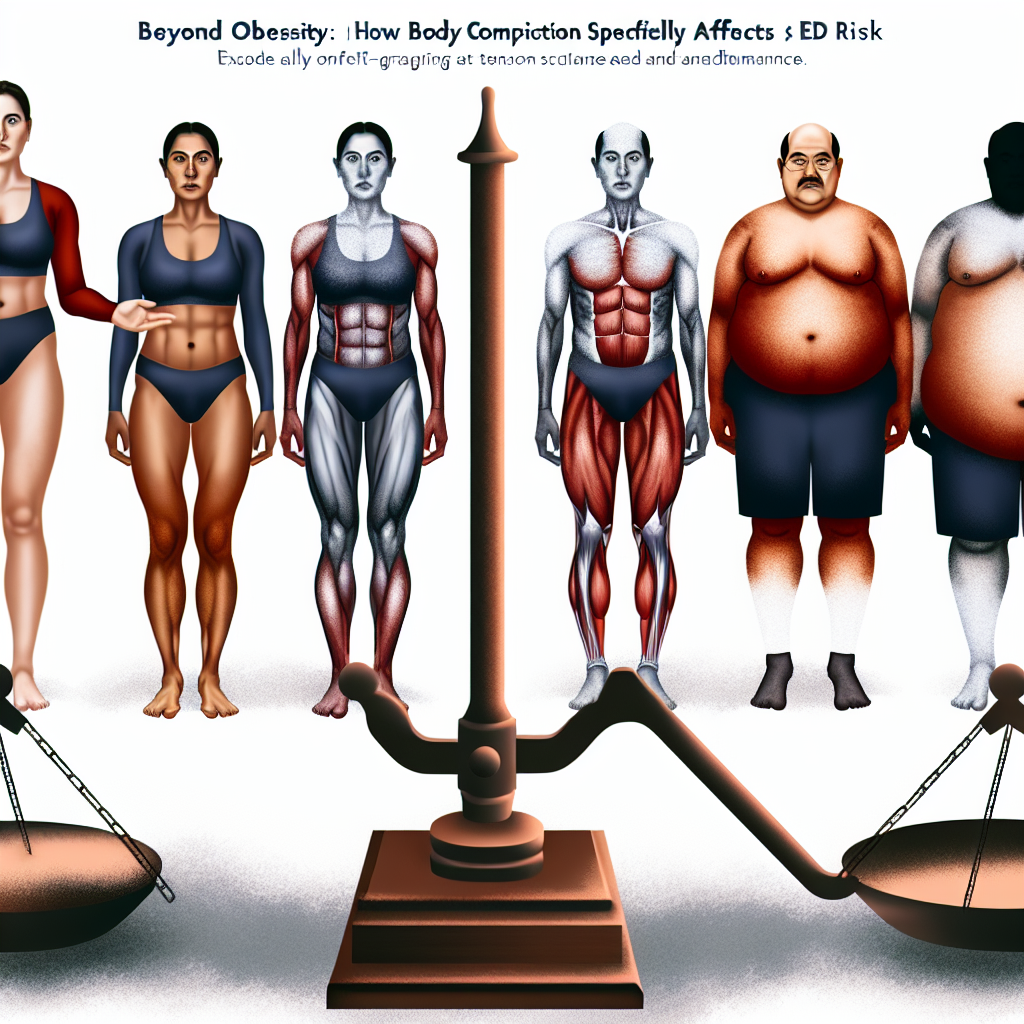
The Body Mass Index (BMI) has long been used as a quick screening tool for health, but when it comes to evaluating eating disorder risk, it falls short. BMI does not differentiate between muscle, fat, water, or bone. For example, a muscular athlete can have the same BMI as a sedentary individual with high body fat and low muscle, yet their overall health and ED risks differ significantly.
This flaw is critical because eating disorders affect individuals across all weight categories. The National Eating Disorders Association reports that about 40% of people with anorexia are not underweight. However, they are often overlooked during BMI-based assessments.
Consider this example: Two teenagers both have a BMI of 24, placing them in the “normal” category. Yet, one has 35% body fat while the other has 20% with higher muscle mass. Their nutritional needs and psychological vulnerabilities are entirely different.
These differences highlight the importance of moving past simplified labels to understand body composition’s role in mental and physical health.
The Role of Body Fat Percentage in Eating Disorder Development
Both high and low levels of body fat come with unique risks related to eating disorders. Excess body fat is frequently associated with weight stigma and bias, which can deeply impact mental health and behavioral patterns. A study found that 70% of adolescents experience weight-based teasing, which sharply increases their risk for binge eating and long-term body dissatisfaction (Puhl & Latner, 2007).
Conversely, individuals with very low body fat—especially athletes—often suffer from hormonal imbalances and low energy availability. These conditions are associated with Relative Energy Deficiency in Sport (RED-S), a state that frequently leads to restrictive eating patterns or even exercise addiction.
For instance, female gymnasts or long-distance runners may excel in their sport while silently battling symptoms like missed menstrual cycles, fatigue, and disordered eating behaviors. To promote healthy performance and eating habits in competitive athletes, visit edrugstore.com for supportive resources.
Muscle Mass, Fitness Culture, and Disordered Eating
While building muscle is often praised as a positive fitness goal, it can sometimes shift into unhealthy territory. The pressure to maintain high muscle mass and low body fat has contributed to a rise in obsessive behaviors such as orthorexia, compulsive training, and extreme clean eating.
This issue is especially prevalent among men. A 2022 study published in JAMA Pediatrics revealed that nearly 22% of adolescent boys show signs of muscle dysmorphia—a distorted body image and obsession with gaining muscle, commonly linked to excessive dieting and overexertion (Nagata et al., 2022).
Take this example: A college student spends hours in the gym daily and only consumes “clean” foods. He may avoid social events to maintain strict control over his eating. Although he might appear physically healthy, this behavior can cause emotional distress and meet the criteria for a disordered eating pattern.
This growing trend highlights the darker side of modern fitness ideals and their role in feeding disordered behaviors.
The Hidden Dangers of Visceral Fat and Weight Shame
Visceral fat—the type of fat surrounding vital organs—poses both physical and emotional risks. Medically, it is linked to a higher likelihood of diabetes, cardiovascular disease, and chronic inflammation. Emotionally, individuals with excess visceral fat often experience internalized shame due to societal bias against certain body types.
“People with excess visceral fat may feel pressure to ‘fix’ themselves using drastic diets or detoxes,” explains Dr. Emma Gold, a registered dietitian specializing in metabolic health. “Unfortunately, these extreme methods often lead to a cycle of restriction and bingeing.”
For instance, someone might try a juice cleanse, lose water weight quickly, then rapidly regain that weight—leading to low self-worth and further disordered eating habits.
These invisible struggles are often missed in visual assessments but can drive serious mental and behavioral patterns. For safe and effective weight management support, explore helpful insights at edrugstore.com.
The Importance of Accurate Body Composition Assessment
To better identify and treat eating disorders, healthcare professionals need tools that provide a clear picture of body makeup. A precise body composition analysis—such as a DEXA scan, BIA meter, or caliper test—can reveal valuable details about fat mass, muscle mass, bone density, and hydration levels.
Such assessments are more effective than simply tracking a person’s weight. They allow practitioners to personalize care plans based on a patient’s specific physical and metabolic profile.
In recovery, for example, a patient may be guided toward rebuilding lean muscle and maintaining stable fat levels without fostering restrictive eating. The bottom line: accurate assessment leads to more effective, individualized treatment.
Moving Toward Holistic, People-Centered Health Models
To address eating disorders meaningfully, we must adopt a comprehensive, inclusive view of body composition. This involves:
– Promoting body diversity and acceptance in schools, athletic programs, and wellness centers
– Staying away from harmful labels like “overweight” or “obese” when they lack clinical nuance
– Encouraging mental and emotional wellness alongside physical health
Research from the Harvard T.H. Chan School of Public Health confirms that interventions that build self-esteem, body image, and life balance are more successful in preventing eating disorders than those centered solely on weight loss.
Instead of treating body size as a diagnosis, we should promote body literacy and healthy behavior choices for all individuals—regardless of size or shape.
Final Thoughts: Redefining What Health Looks Like
Recognizing the complex relationship between body composition and eating disorder triggers allows us to take a proactive stance in care and prevention. While obesity is a visible factor, fat distribution, lean mass, and stigma are equally essential components of understanding ED vulnerability.
By shifting to a body-positive and evidence-based approach to health, we can offer support that’s inclusive, accurate, and compassionate.
As Dr. Mitchell wisely states, “We can’t treat eating disorders effectively if we’re looking at weight alone. Health isn’t a number. It’s function, feelings, and habits.”
To find helpful resources for safe and sustainable wellness strategies, visit edrugstore.com and continue your journey toward a deeper, more holistic understanding of health.
References
– National Eating Disorders Association (2023). What Are Eating Disorders? https://www.nationaleatingdisorders.org/
– Puhl, R. M., & Latner, J. D. (2007). Stigma, Obesity, and the Health of the Nation’s Children. Psychological Bulletin, 133(4), 557–580.
– Nagata, J. M., et al. (2022). Muscle Dysmorphia in Boys and Young Men. JAMA Pediatrics.
– Harvard T.H. Chan School of Public Health (2023). Eating Disorders and Body Image.
– National Institute of Mental Health (NIH). Eating Disorders Statistics. https://www.nimh.nih.gov/health/statistics/eating-disorders.shtml