
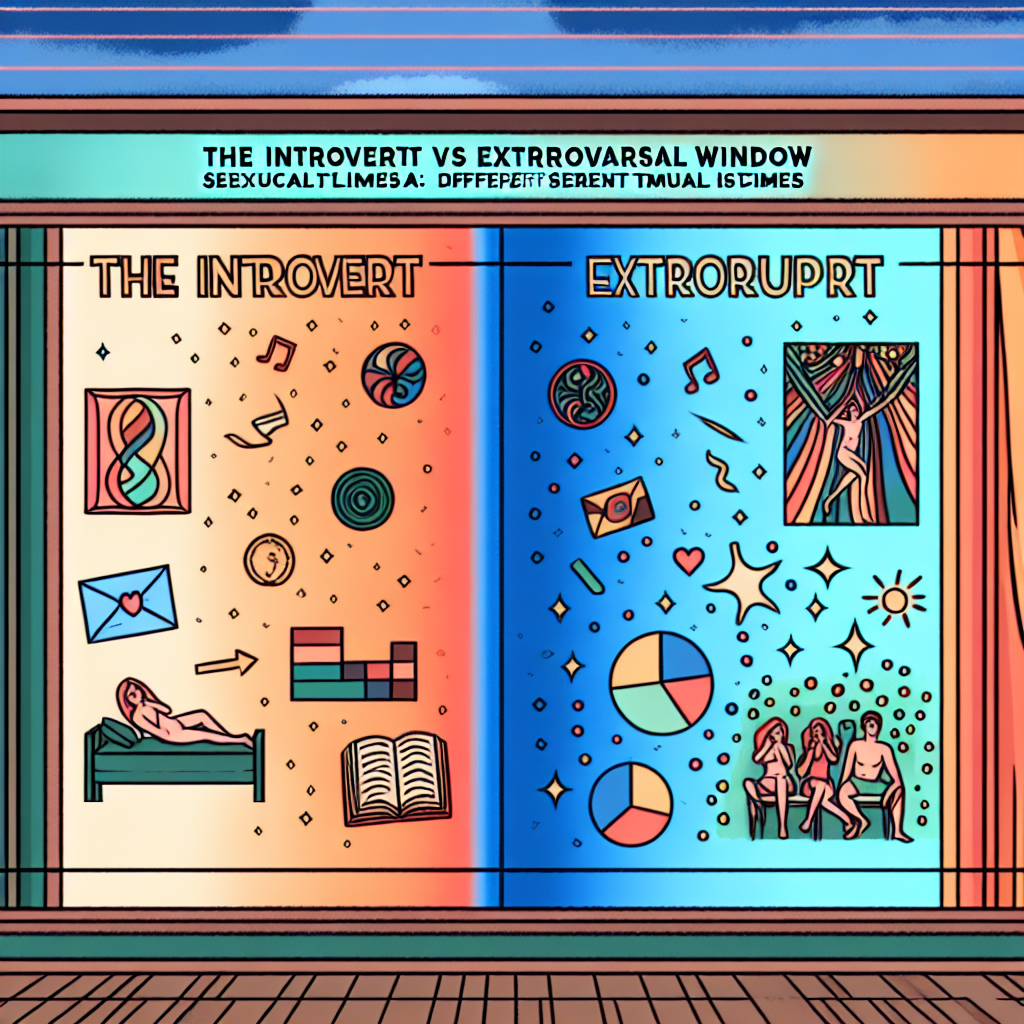
The Introvert vs. Extrovert Arousal Window: Understanding Different Sexual Timelines
Why Arousal Timelines Matter in Relationships
Understanding the subtleties of sexual desire is essential for building and maintaining a satisfying long-term relationship. While we often focus on emotional connection, physical attraction, and communication, one key but often overlooked factor is personality type. Specifically, whether you or your partner identifies as an introvert or extrovert can significantly influence how and when sexual desire manifests. This is where the concept of the “arousal window” becomes important.
Recent research from the Kinsey Institute reveals that personality traits play a notable role in sexual desire and fulfillment, with 62% of couples citing mismatched intimacy preferences as a recurring issue in their connection.
What Is an Arousal Window?
The arousal window refers to the amount of time and type of stimulation a person needs before feeling sexually aroused. It involves more than just physical readiness—it includes emotional safety, mental alignment, and a conducive environment. Each person’s timeline is shaped heavily by individual personality traits and may shift over time, even within the same relationship.
For example, one person might need a calm room and heartfelt conversation before intimacy feels inviting, while another may get excited from a flirtatious message in the middle of a busy day. Learning what turns each partner on—and when—is essential to building lasting sexual chemistry.
Introverts and the “Slow Burn” Arousal Pattern
Introverts typically process thoughts and emotions inwardly. Social interactions often drain their energy, and they need solitude to recharge. This inward nature impacts their sexual arousal, which tends to require emotional and mental alignment before physical attraction is fully activated.
Psychologist Dr. Laurie Helgoe, author of Introvert Power, explains that introverts often need inner clarity and emotional connection to experience sexual desire.
Key characteristics of the introvert arousal window include:
– Longer build-up time; emotional and mental stimulation is required well before physical intimacy.
– Desire that is rooted in connection—without emotional security, sexual interest may remain dormant.
– Dislike for overstimulation; loud environments or impromptu advances may shut down arousal quickly.
Rather than fast passion, introverts often build desire gradually. Acts like reading together, meaningful conversations, or tender physical closeness before initiating touch can pave the way for deeper intimacy later.
Extroverts and the “Instant Spark” Arousal Response
On the flip side, extroverts are typically energized by social interaction and external activities. They tend to react faster to physical and visual cues and are often more open to spontaneous intimacy.
Dr. Susan Cain, author of Quiet: The Power of Introverts in a World That Can’t Stop Talking, notes that extroverts tend to be sensation-seeking, with nervous systems more primed to respond quickly to outside stimuli.
Traits common in the extrovert arousal window include:
– Fast arousal onset; even a playful gesture or visual cue can trigger sexual interest.
– Physical attraction doesn’t always depend on emotional connection.
– A preference for excitement, novelty, and spontaneity—trying new settings or ideas can keep intimacy fresh and engaging.
Imagine an extroverted partner returning home from a lively gathering, feeling invigorated and immediately ready for sensual connection.
When Arousal Timelines Clash
When introverts and extroverts are in relationships together, their differing sexual timelines can result in misunderstandings and frustration. One partner may be physically ready for intimacy, while the other is still building emotional readiness.
Common challenges include:
– Extroverts may feel unappreciated when their spontaneous advances are declined.
– Introverts might feel emotionally overwhelmed or pressured, leading them to withdraw.
Without understanding these differences, couples might fall into patterns where one partner pursues and the other retreats, creating a cycle of disconnection.
Strategies to Bridge the Arousal Gap
The good news is that awareness is the foundation for navigating these differences. With intention and communication, couples can align their intimacy rhythms.
Communicate with Openness and Empathy
Starting the conversation is key. Use “I” statements to share your experience without blame. For instance:
– Instead of saying, “You never want sex,” try, “I feel most connected when we’ve had time to unwind emotionally.”
– An extrovert might say, “I feel closer to you when we’re spontaneous—it helps me feel bonded.”
Consider establishing regular “desire check-ins” to create a safe space where both partners can express their needs and experiences.
Set Aside Time for Intimacy
While scheduling sex may feel clinical, it can actually be liberating. It gives introverts time to mentally and emotionally prepare while assuring extroverts that intimacy is a priority.
For example, planning a “touch-in” night every Friday provides structure, reduces anxiety, and honors both partners’ expectations.
Create Mutually Supportive Environments
Adapting your environment can help meet in the middle. Calmer settings benefit introverts, while playful or unique elements may energize extroverts.
Try setting the mood with soft lighting or calming music for the introvert, while adding some playful touches—like new scents or massage oil—to intrigue the extrovert.
Use Foreplay as a Connection Tool
Foreplay isn’t just physical—it’s an emotional bridge. For introverts, it’s about slowly entering the headspace for intimacy. For extroverts, it builds anticipation and engagement.
Start with physical closeness, eye contact, or shared vulnerability. Even non-sexual touch like hugging or gentle back rubs can lay the foundation for desire.
Respond with Curiosity, Not Judgment
When one partner isn’t ready for intimacy, avoid taking it personally. Instead, ask gentle questions to understand their experience.
Moments of misalignment can be opportunities for non-sexual bonding. Something as simple as holding hands or snuggling on the couch reinforces emotional connection without pressure.
Acknowledging When Support Is Needed
If desire gaps persist or become disheartening, seeking professional guidance or exploring sexual wellness products may help. Platforms like eDrugstore.com offer medically reviewed solutions for libido support and relationship enhancement.
Conclusion: Syncing Rhythms for Lasting Connection
When partners take the time to learn each other’s arousal windows, they shift from frustration to empathy. Rather than battling mismatched desire, they begin to understand it as a rhythm to respect and dance to—together.
Satisfying intimacy isn’t about instant agreement; it’s about intentional connection, compassionate listening, and a willingness to adapt.
Start by asking each other a simple but powerful question: “What gets you in the mood—and what helps you stay there?”
Tuning into those answers can be the beginning of deeper, more fulfilling intimacy—for both introverts and extroverts alike.
