Understanding the Childhood Messaging Effect: How Early Shame Can Impact Adult Sexual Arousal
The Hidden Roots of Intimacy Challenges
It’s a topic that often goes unspoken, yet it significantly shapes our adult relationships and self-perception: the impact of childhood messages about sex and the body. Many adults who experience low sexual arousal, difficulty with intimacy, or emotional disconnection discover that these issues did not originate in adulthood. Instead, they stem from early life experiences filled with shame or negative messaging tied to sexuality and body image.
This phenomenon is known as the Childhood Messaging Effect on Sexual Arousal. It refers to the lasting influence that early societal or family beliefs about shame, pleasure, and sexuality have on adult nervous system responses to intimacy. By exploring this concept, individuals can gain insight, break emotional cycles, and begin cultivating joy and connection within their relationships.
Learn more about therapeutic strategies and tools for sexual wellness at edrugstore.com.
Shame as a First Lesson
For many children, the first lessons about sex, touch, and the body are clouded by discomfort, criticism, or silence. Whether it’s a parent chastising a child for self-touch, a teacher warning about the dangers of sexual expression, or a religious leader framing desire as sinful, the resulting message is clear: sex is bad, the body is shameful, and desire is something to suppress.
These messages often linger well beyond childhood. Psychologists refer to these lingering ideas as “core beliefs”—deep-rooted convictions that shape how we see ourselves and how our nervous system reacts to intimate situations.
Dr. Alexandra Solomon, a licensed clinical psychologist who specializes in relationships and intimacy, explains:
“Messages of shame around sexuality are often planted early and persist into adulthood, undermining a person’s ability to feel safe and connected in their own body.”
The result is intimacy that feels stressful, awkward, or disconnected rather than joyful and affirming.
The Nervous System Remembers
From a biological perspective, the stress and arousal systems are intimately connected. If a child grows up with messages that frame the body or sexual feelings as unsafe, the brain learns to associate those feelings with danger rather than pleasure. Over time, the nervous system becomes trained to suppress arousal.
This pattern is linked to the concept of neuroplasticity—the brain’s ability to rewire itself based on repeated experiences. According to a study published in the Journal of Sexual Medicine, individuals who experience emotional neglect or childhood trauma are up to 2.7 times more likely to struggle with sexual dysfunction later in life.
In adulthood, people may find that sexual desire is blocked by anxiety or fear—not due to a hormonal issue but because their body is doing what it learned: protecting them from perceived emotional risk.
For example, a woman raised with the belief that “good girls shouldn’t enjoy sex” may find herself emotionally numb during intimacy. This isn’t due to lack of attraction but because her nervous system still interprets sexual expression as something dangerous or shameful.
Common Childhood Messages That Cause Harm
Many damaging childhood messages about sex and identity seem harmless at first glance. But these phrases, often rooted in culture or religious traditions, can leave lasting emotional imprints that contribute to shame and sexual dysfunction in adulthood.
Some examples of harmful messaging include:
– “Good girls don’t touch themselves.”
– “Masturbation is wrong or unhealthy.”
– “People who enjoy sex too much are immoral.”
– “Real men don’t express feelings.”
– “You’re going to hell if you do that.”
These beliefs can lead to long-term challenges, including low libido, guilt during sexual activity, or anxiety in sexually intimate situations.
The National Sexual Violence Resource Center reports that more than 60% of adults received some form of shaming sexual message during childhood—typically from caregivers, media, or religious institutions.
The Silent Struggles of Adulthood
Because sexual challenges are often stigmatized, many adults remain quiet about their difficulties. They may think, “Something is wrong with me,” or believe they’ve simply lost interest in sex. While aging and hormonal changes can influence libido, many of these issues stem from internalized emotional and psychological blocks.
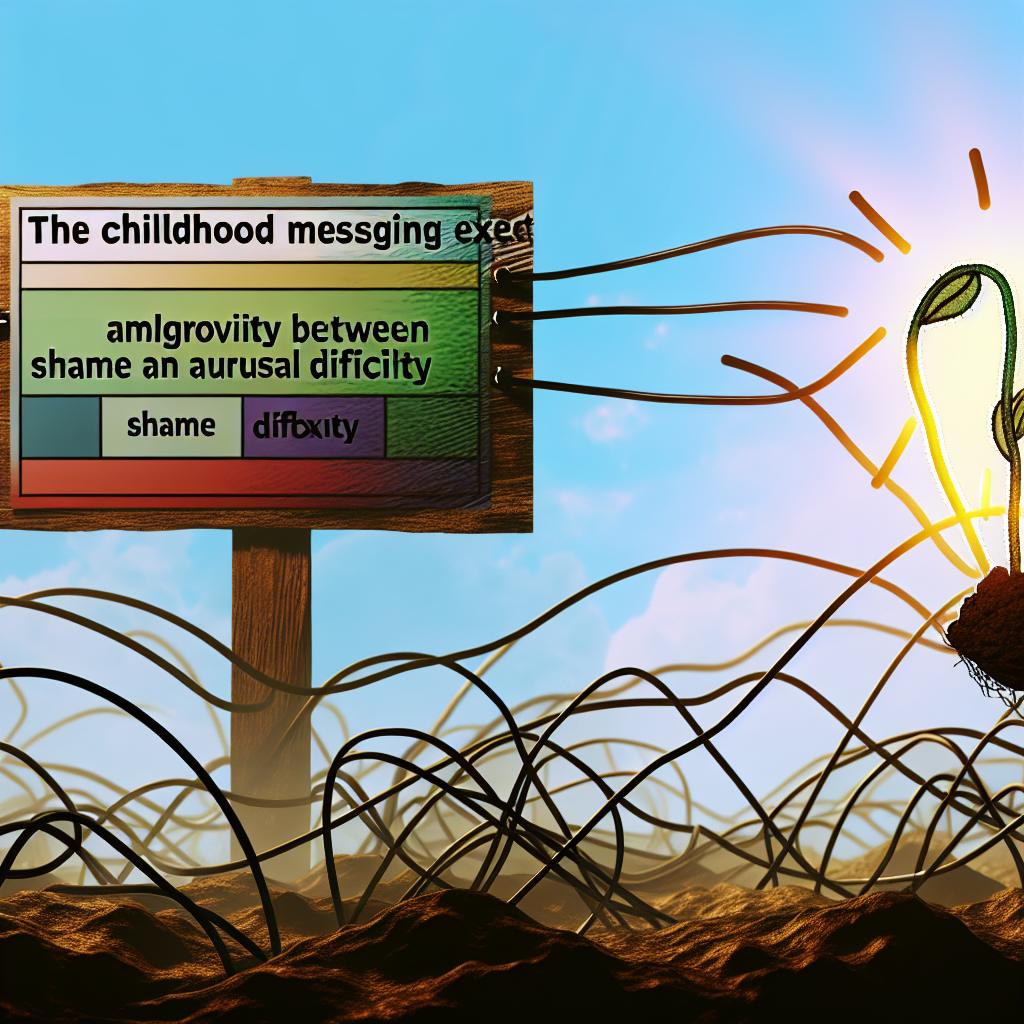
Further complicating the issue is the shame surrounding these struggles. This shame often triggers a vicious cycle:
Shame → Reduced Arousal → More Shame → Even More Inhibition
Partners may misinterpret reduced desire as rejection. Meanwhile, the individual dealing with these challenges may isolate emotionally, leading to increased disconnection and misunderstanding.
The truth is: you’re not broken. Your body is reacting in the way it was conditioned to protect itself from emotional harm—and recognizing this is the first step to healing.
Healing Shame and Reclaiming Intimacy
The good news: the cycle of shame and suppressed arousal can be disrupted—and even reversed. This process begins with self-awareness, compassionate support, and intentional healing.
Here are proven steps to begin reconnecting with yourself, your body, and your sexual vitality:
1. Identify the Harmful Beliefs
Begin by uncovering the specific beliefs you absorbed during your formative years. Journaling, therapy, or open conversations with a trusted partner can help bring these unconscious messages into awareness.
Example: “I hadn’t realized I thought wanting sex made me bad until I wrote it down and questioned it.”
2. Question and Replace the Beliefs
Once you’ve identified these harmful ideas, ask yourself: Are they true? Who told me this? Does this belief still serve me?
Challenging and replacing outdated beliefs is a powerful step in healing. Books like Come As You Are by Dr. Emily Nagoski offer helpful tools for reframing these limiting thoughts with evidence-based perspectives.
3. Reconnect with Your Body
Gentle somatic exercises—such as breathwork, touch-based practices, or slow movement—can help shift your nervous system from fear into safety. These practices reintroduce the body as a place of trust and pleasure.
Explore doctor-approved tools and resources for sexual wellness support at edrugstore.com.
4. Initiate Self-Compassion
Shame loses its hold when faced with kindness. Replace inner criticism with affirmations like, “My body is worthy of pleasure,” or “It’s okay to feel desire.” Kindness helps rebuild self-trust and paves the way for emotional and sexual healing.
5. Share Your Story with Safe Partners
When you’re ready, open up to a partner you trust. Vulnerability fosters closeness. Create space for slow, pressure-free intimacy that prioritizes connection over performance. Healing often begins not from trying to fix yourself but from learning to be present in shared understanding.
You Are Not Alone
If this content resonates with you, know that you’re far from alone. Research shows that approximately 40% of women and 30% of men report experiencing some form of sexual dysfunction linked to emotional or psychological causes.
But healing doesn’t begin in the bedroom—it begins with compassion, reflection, and presence. Rewriting your story and redefining your relationship with your body is not only possible, but deeply empowering.
You are not broken. You are responding to early-life conditioning in a completely understandable way. With patience, support, and healing practices, you can feel safe, joyful, and whole in your own skin again.
Start gently. Start small. But most importantly—start.
Sources and Further Reading
– Centers for Disease Control and Prevention (2022). Adverse Childhood Experiences (ACEs)
– Journal of Sexual Medicine (2016). Childhood Adversity and Adult Sexual Function
– Solomon, A. (2017). Loving Bravely
– National Sexual Violence Resource Center (NSVRC)
– Nagoski, E. (2015). Come As You Are: The Surprising New Science That Will Transform Your Sex Life
– American Psychological Association: Core Beliefs and Cognitive Restructuring
– edrugstore.com – Explore Sexual Health Resources and Tools