Understanding the Nervous System: Your Body’s Internal Communication Network
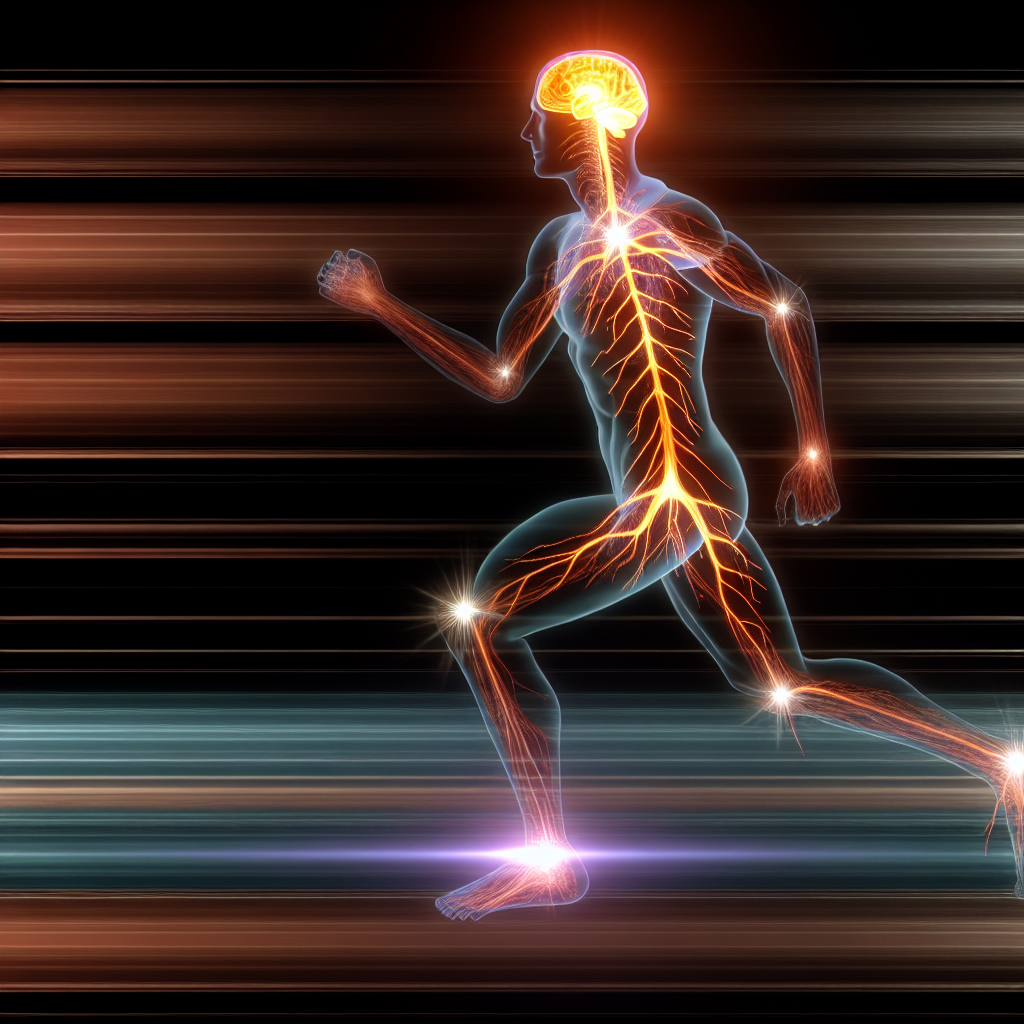
Ever wonder why some athletes react quickly while others take a bit longer? While practice matters, the real secret might lie within your nervous system. The nervous system controls how quickly your brain sends messages to your muscles, making it key in determining how “wired for speed” you are.
The nervous system can be divided into two main parts:
– Central Nervous System (CNS): This includes your brain and spinal cord, working as the master hub.
– Peripheral Nervous System (PNS): This system relays information between your brain and the rest of your body, including your muscles and organs.
Motor neurons—special nerve cells responsible for movement—can send signals at up to 268 miles per hour, according to the National Institutes of Health.
Dr. Laura Wilson, a neurophysiologist at the University of South Florida, says, “The efficiency of neural transmission plays a massive role in how fast and coordinated your physical movements are.” In short, when your brain communicates quickly with your muscles, your reactions become faster—a valuable asset in any athletic activity.
How the Nervous System Affects Movement in Physical Education
Physical education is about more than just building strength. It also helps train your brain and muscles to work together. Every physical skill you practice—from sprinting to jumping—is guided by your nervous system. These repeated movements lead to something called “neural adaptation,” which helps your brain and muscles work more efficiently over time.
For example, when you’re learning to shoot a basketball, your first few attempts may feel awkward. But with practice, your body adjusts, and the motion begins to feel smooth and automatic. This improvement comes from developing motor programs within your brain.
This process is known as neuromuscular coordination training, a crucial component of effective PE programs that aim to improve both brain function and muscle performance.
Born Fast or Built Fast? Exploring Genetics and Trainability
Are fast reactions something you’re born with, or can they be trained over time?
The truth is, both biology and practice play a role. Genetics influence your nervous system and your muscle fiber composition. Fast-twitch muscle fibers, for instance, are better for quick bursts of activity, like sprinting or jumping, while slow-twitch fibers are better for endurance tasks.
However, studies show that speed and reaction time can be improved through targeted training. According to the American Council on Exercise (ACE), nervous system-focused speed training can benefit even those without a natural athletic background.
For example, a group of beginner runners improved their sprint times by 15 percent after just four weeks of practicing reaction-start drills. This shows that consistent training can lead to meaningful performance gains, regardless of your starting point.
Top 5 Exercises to Improve Speed via Nervous System Training
Want to move faster and respond quicker? Try these proven methods that boost neural transmission and improve physical performance:
1. Reaction Drills – Practice catching a dropped object or responding quickly to visual cues. These activities sharpen the connection between your brain and body.
2. Plyometric Exercises – Movements like box jumps and squats activate fast-twitch muscle fibers and improve your nervous system’s activation rate.
3. Agility Work – Ladder drills and cone weaving challenge the brain, enhancing balance, coordination, and speed.
4. Sprint Intervals – Running short bursts at maximum effort helps train your brain to fire muscle signals more rapidly.
5. Sleep and Recovery – Proper rest is essential for nervous system repair. Overtraining without recovery can slow your progress and increase the risk of injury. For wellness solutions that support recovery, visit edrugstore.com.
Strength coach Joe DeFranco explains it this way: “Your nervous system is what limits your performance. You can be strong, but if you can’t activate strength quickly, it won’t matter on the field.”
The Role of Teachers and Coaches in Training Reaction Speed
PE teachers and coaches are more than just exercise leaders—they are educators who shape how the brain and body communicate.
Educators can design activities that encourage quick decision-making and fast reactions. For example, in a game of tag that requires students to change direction at the sound of a whistle or a colored signal, they’re improving cognitive processing and physical responses at the same time.
By including reaction-time drills, coordination games, and movement challenges in their programs, teachers can help students of all levels work toward faster, more efficient activity.
Why Fast Reaction Time Matters in Sports and Everyday Life
In fast-moving sports like soccer, basketball, or tennis, split-second timing can determine success. The difference between winning and losing may come down to a tenth of a second.
In fact, a 2022 study from the Sports Science Review found that elite athletes typically have reaction times that are 20 to 30 percent faster than amateur players. This speed isn’t only important in competition—it plays a major role in injury prevention as well. A quicker nervous system can help stabilize your body when you trip, twist, or fall.
Additionally, faster neural processing aids focus, coordination, and confidence, which benefits everyone—not just athletes.
Final Thoughts: Train Your Nervous System, Unlock Your Potential
While some individuals are born with naturally faster response systems, research clearly shows that speed and reactivity can be developed over time. Your nervous system is adaptable, and with focused practice, nearly anyone can improve their coordination and performance.
Smart training methods, including speed drills, brain-body games, and adequate sleep, help optimize your brain’s communication with your muscles. So whether you’re in PE class, on a sports team, or jogging in your neighborhood, you’re not just working your body—you’re also upgrading your mind.
If you have a speed training tip or favorite brain-body exercise, share it in the comments below. Let’s build a faster, smarter community together.
References
1. National Institutes of Health (NIH). “Neurons and Their Processes.” https://www.nih.gov
2. American Council on Exercise (ACE). “Neuromuscular Training for Speed and Agility.” https://www.acefitness.org
3. Sports Science Review Journal. “Reaction Time Differences Between Elite and Amateur Athletes.” 2022
4. DeFranco, Joe. “The Nervous System and Athletic Performance.” https://www.defrancostraining.com
5. University of South Florida. Interview with Dr. Laura Wilson, Neurophysiologist, 2023
6. eDrugstore.com. “Health and Wellness for Recovery and Sleep.” https://www.edrugstore.com