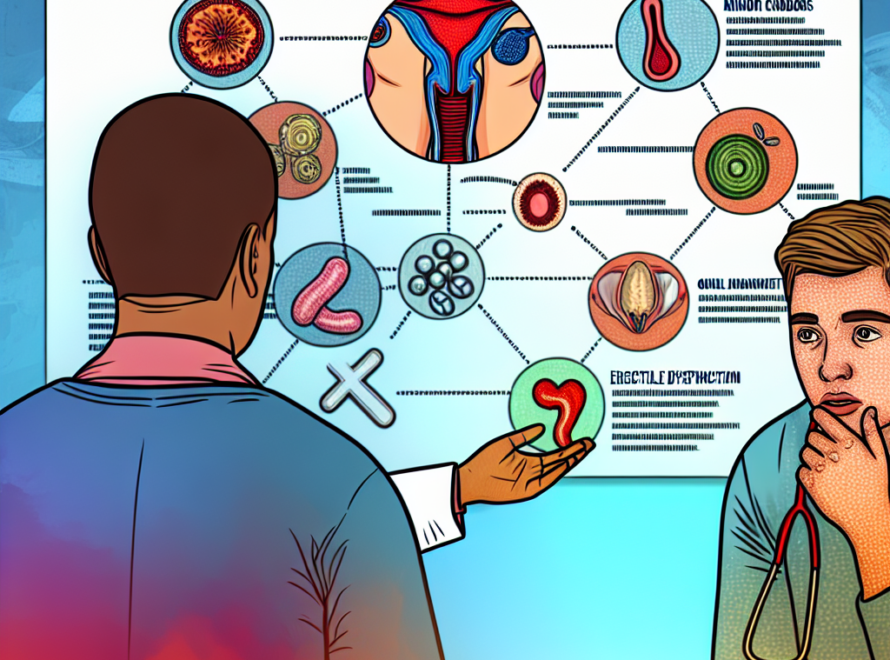

Regenerative Therapies for Erectile Dysfunction: The Future of ED Treatment with PRP and Shockwave Therapy
Understanding the New Frontier in ED Treatment
Erectile dysfunction (ED) affects over 30 million men in the United States, often leading to diminished self-esteem, strained relationships, and reduced quality of life. While conventional medications like Viagra and Cialis have helped millions, they typically provide short-term relief without addressing the underlying cause.
That’s why regenerative medicine—aimed at restoring healthy tissue and function—is gaining traction. Two leading regenerative approaches now being explored are platelet-rich plasma (PRP) therapy and low-intensity shockwave therapy (Li-ESWT). But how effective are they, and where do we stand with their development?
What Makes Regenerative Therapies Different?
Unlike oral medications that temporarily boost blood flow, regenerative therapies target the root causes of ED by repairing and rejuvenating blood vessels, nerves, and penile tissue.
“Regenerative medicine is about precision and repair,” says Dr. Ronald Wheeler, a board-certified urologist and expert in men’s sexual health. “It offers potential long-term solutions, moving beyond temporary symptom management.”
The two most promising treatments are:
– Platelet-Rich Plasma (PRP) Therapy, often referred to as the “P-Shot”
– Low-Intensity Extracorporeal Shockwave Therapy (Li-ESWT)
Let’s explore how each works and the research supporting their effectiveness.
PRP Therapy for ED: Harnessing Your Body’s Healing Power
Often branded as the “P-Shot,” platelet-rich plasma (PRP) therapy is a minimally invasive treatment that uses the patient’s own blood to stimulate tissue healing. The process begins with a blood draw, which is then spun in a centrifuge to separate the platelet-rich plasma filled with growth factors. This plasma is then injected into targeted areas of the penis.
How PRP Therapy Helps ED
PRP therapy is believed to work by:
– Promoting angiogenesis (the formation of new blood vessels), which enhances blood flow
– Encouraging the repair of nerve tissue and smooth muscle, both essential for strong erections
– Offering a low-risk solution using the patient’s own biological material, minimizing side effects
Preliminary clinical data and anecdotal cases report improvements in erectile function within a few weeks. A small pilot study by Dr. Charles Runels, the creator of the P-Shot, showed that over 70% of participants experienced enhanced erectile firmness and sexual satisfaction. However, this particular study lacked a placebo-controlled group, making the results less definitive.
Currently, PRP therapy is not approved by the FDA specifically for ED treatment. Protocols vary, and some clinics recommend a single session while others suggest multiple treatments. For a reliable comparison of treatment options, edrugstore.com offers a comprehensive guide to ED therapies.
Medical Insight Into PRP for ED
“The initial findings are intriguing,” observes Dr. George Benson, a sexual medicine researcher at Johns Hopkins. “However, without standardized protocols, it’s difficult to ensure consistent results.”
Until larger, rigorously designed studies are completed, PRP therapy for ED remains an experimental approach with strong potential.
Shockwave Therapy: A Non-Invasive Game Changer
Low-Intensity Extracorporeal Shockwave Therapy (Li-ESWT) takes a different but equally innovative approach. It involves the application of low-frequency sound waves to the penis, stimulating tissue regeneration and improving blood flow.
Why Shockwave Therapy Is Gaining Popularity
This therapy is growing in popularity because it:
– Does not require medication or injections
– Targets the vascular causes of ED rather than just the symptoms
– May produce long-lasting improvement in erectile function
Shockwave therapy is administered through a handheld device and usually involves 6 to 12 sessions. It’s completely non-invasive and often well-tolerated by patients.
Patient Success Story
Mark, 57, had battled ED for nearly ten years. Though oral medications helped initially, their effects began to diminish. After completing six sessions of shockwave therapy, he began experiencing spontaneous erections again. “It changed my life,” he said. “I feel free from relying on pills.”
Scientific Backing for Shockwave Therapy
Shockwave therapy has stronger scientific validation than PRP. A 2017 meta-analysis published in the International Journal of Impotence Research found significant improvement in erectile function among men with vascular ED.
Likewise, a 2021 review published in the Journal of Sexual Medicine concluded that the therapy is both safe and effective—particularly for men with mild to moderate ED.
However, outcomes can vary based on factors such as age, general health, and underlying conditions like diabetes or heart disease.
Is Combining PRP and Shockwave Better?
Some forward-thinking clinics now offer combined therapy, leveraging both PRP and shockwave therapy for a more comprehensive regenerative treatment. The rationale is that shockwaves enhance blood flow and tissue receptivity, while PRP delivers the building blocks needed for repair and recovery.
Though research on combination treatment is still emerging, early signs are encouraging. A 2021 pilot study in the journal Translational Andrology and Urology found patients showed better outcomes when undergoing combination therapy compared to either treatment alone.
Still, treatment protocols are experimental, and patients should seek guidance from professionals with specialized training in regenerative urology.
What You Need to Know Before Starting Regenerative Therapy
Interested in exploring regenerative therapies for ED? Here are key considerations:
– Consult a certified urologist or sexual medicine expert before starting
– Stay away from clinics that offer quick fixes without scientific backing or do not follow established medical standards
– Expect to pay out of pocket, as most of these treatments range from $500 to $3,000 and are not covered by insurance
To compare treatment costs and explore vetted options, visit edrugstore.com for practical resources.
Looking Ahead: Where Is the Field Headed?
The future holds great promise. Ongoing clinical trials are working to establish standardized protocols and potentially pave the way for FDA approval. According to Dr. Elaine Hughes, a researcher in urologic innovation, “We’re not far from a time when these therapies could be standard care for men with early-stage erectile dysfunction.”
As the shift moves from managing symptoms to restoring function, regenerative therapies may soon reshape how we treat ED.
Final Thoughts
We are at the forefront of a major transformation in erectile dysfunction treatment. While more research is needed, PRP and Li-ESWT represent two of the most promising alternatives to traditional medication.
With proper medical guidance and realistic expectations, regenerative medicine has the potential to restore much more than physical performance—it can revitalize self-esteem, intimacy, and overall well-being.
For more insights into both conventional and emerging ED treatments, visit the ED Treatment Hub at edrugstore.com.
Sources
– National Institutes of Health. Erectile Dysfunction: NIH Fact Sheet. 2020.
– Burnett AL, Nehra A, Breau RH, et al. Erectile Dysfunction: AUA Clinical Guidelines. Journal of Urology, 2018.
– Kalyvianakis D, Hatzichristodoulou G. Low-Intensity Shockwave Therapy for Erectile Dysfunction: A Systematic Review. Journal of Sexual Medicine, 2021.
– Lueders S, et al. Platelet-Rich Plasma for Erectile Dysfunction: A Review. Sexual Medicine Reviews, 2020.
– Vardi Y, et al. Effects of Low-Intensity Shockwave Therapy for Erectile Dysfunction. International Journal of Impotence Research, 2017.
– Zaslau S, et al. The Effect of Combined PRP and Li-ESWT in ED. Translational Andrology and Urology, 2021.