
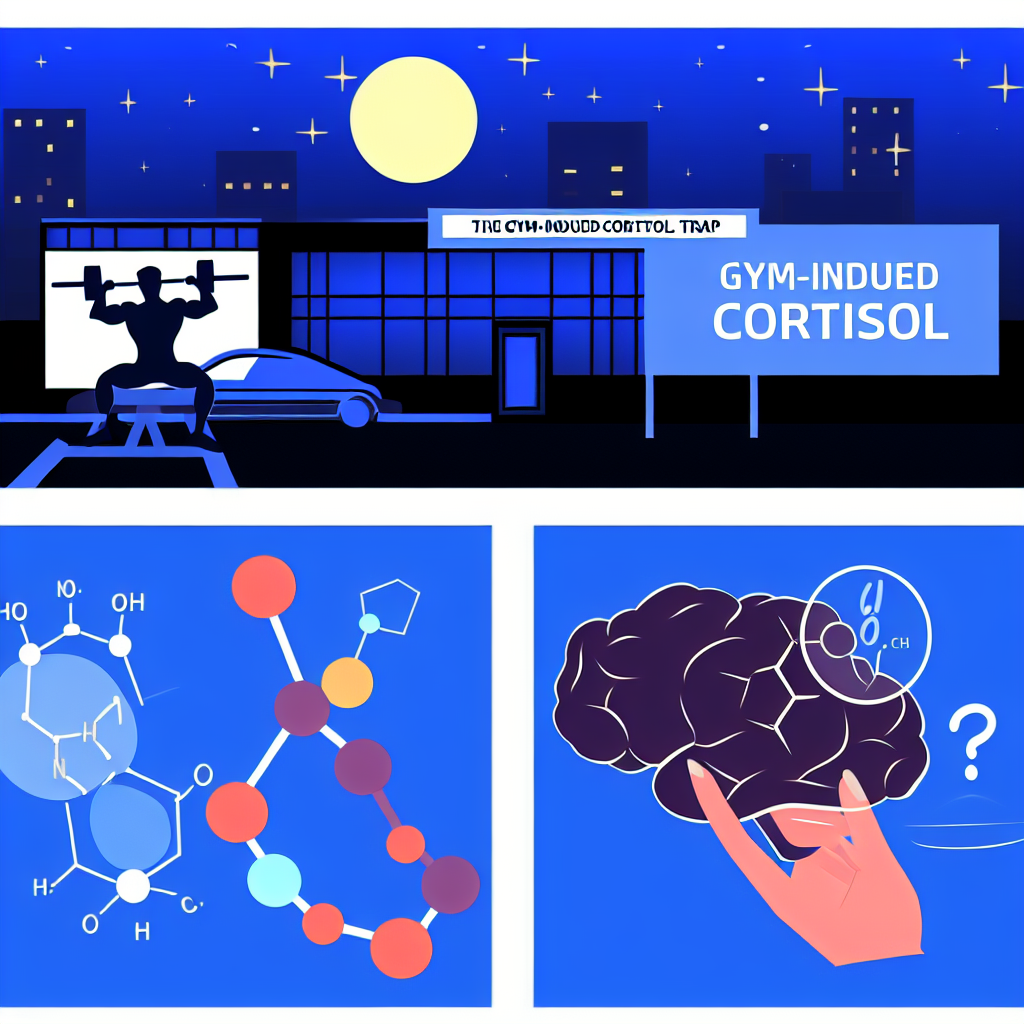
The Hidden Cost of Late-Night Workouts
In today’s high-speed, performance-driven culture, many men strive to get in shape despite busy work schedules. That often means squeezing in late-night workouts after a full day. While the determination is admirable, the timing may be counterproductive—especially when it disrupts key hormones involved in male health, including testosterone.
Welcome to what we call the “Cortisol Trap,” where evening workouts elevate stress hormones that interfere with one of the most important aspects of male well-being—erectile function. Fitness is essential, but exercising at the wrong time may be holding you back in more ways than one.
Understanding Cortisol: The Stress Hormone That Impacts Vitality
Let’s begin with cortisol, the body’s primary stress-response hormone. Produced by the adrenal glands, cortisol plays an essential role in managing inflammation, metabolizing nutrients, and regulating the sleep-wake cycle. When released briefly in response to stress, it’s beneficial.
However, consistently elevated cortisol can create trouble. A 2019 study published in the Journal of Clinical Endocrinology & Metabolism found that prolonged cortisol elevation can reduce free testosterone levels by up to 30%. Since testosterone is essential for libido, muscle development, energy, and male sexual performance, this imbalance has significant downstream effects.
As hormone health expert Dr. Kyle Gillett explains, “Cortisol and testosterone function on a teeter-totter. When one increases, the other tends to decrease.” If you regularly lift weights or perform high-intensity training at night, you could be displacing valuable testosterone with an excessive cortisol surge.
Exercise Timing: The Problem With Late-Night Training
Your body follows a natural 24-hour cycle, known as the circadian rhythm, which helps regulate hormone production throughout the day. Normally, cortisol peaks in the morning to help you wake up and declines by evening, allowing melatonin and testosterone to rise during sleep.
Doing high-intensity workouts at night disrupts this balance by spiking cortisol at the wrong time—just when your body is preparing for sleep and recovery. Increased nighttime cortisol can block melatonin synthesis and derail testosterone production, especially during the critical sleep cycles just after midnight.
A 2018 study from the journal Sleep Health shows that even temporary circadian disruption can lower sleep quality and alter hormone regulation. That means hitting the gym at 10 p.m. and smashing personal records may feel rewarding short term—but it could harm your hormone health in the long run.
How Elevated Cortisol Impairs Erections
Let’s look at how chronically high cortisol connects directly to erectile dysfunction:
1. Reduced Blood Flow: High cortisol causes vasoconstriction, or the narrowing of blood vessels. This reduces blood flow to the penis, which is essential for a strong erection. Urologist Dr. Richard Harris notes, “An erection is a hydraulic event. If you restrict the flow, the system fails.”
2. Suppressed Testosterone: Persistent cortisol elevation interferes with the hypothalamic-pituitary-gonadal axis, your body’s hormone production network. Reduced testosterone lowers libido, impairs function, and makes arousal more difficult.
3. Constant Fight-or-Flight Mode: Elevated cortisol keeps your body on high alert, which shuts down non-essential functions—like arousal. Without transitions into a relaxed, parasympathetic state, sexual performance often suffers.
To explore more about ED causes and medication options, visit edrugstore.com for up-to-date information.
Lack of Sleep: A Silent Saboteur of Male Hormones
Cortisol doesn’t stop working after your workout—it often interferes with the one thing you need for hormonal repair: quality sleep. Sleep is when testosterone is produced in the highest quantities.
According to research in the Journal of the American Medical Association, men who sleep only 5 hours per night for one week can experience testosterone drops of 10 to 15%. Since 90% of your daily testosterone is created during REM sleep, anything that disrupts that—including high nighttime cortisol—can impair recovery and energy.
Let’s use a real-world example: A CrossFit coach feeling exhausted all day, losing libido, and tossing and turning at night may assume he’s overtraining. But the problem might not be the volume—just the timing. By disrupting sleep, stress hormones erase the benefits of the workout.
Real Men, Real Lessons: What Happens When You Ignore the Clock
These cases aren’t just hypothetical. Here’s what happened to real guys when they ignored their circadian rhythm:
– John, 38, a financial analyst, loved lifting heavy at 10:30 p.m. but couldn’t stay asleep—and his relationship suffered.
– Mark, 41, a busy dad, swapped nighttime lifting for yoga and saw a 50% improvement in natural morning erections after just one month.
– Liam, a night-shift worker, assumed he was feeling weak due to overtraining. In reality, his hormones were out of sync from misaligned gym sessions.
In all cases, the solution wasn’t another supplement or prescription—it was training smarter with the body’s schedule.
How to Avoid the Cortisol Trap and Preserve Male Hormonal Health
The good news? You don’t need to quit the gym. You just need to work out at times that align with your body’s hormonal rhythms. Here’s how:
1. Train Earlier in the Day
Aim to work out when your cortisol levels are naturally higher—early morning or by mid-afternoon. Evening sessions should wrap up well before sunset whenever possible.
2. Choose Low-Impact Activities After Dark
If nighttime is your only option, trade high-intensity exercises for low-impact routines. Gentle stretching, yoga, or light walking reduces cortisol and promotes blood flow—all without overstimulating your system.
3. Improve Sleep Hygiene
Avoid working out within three hours of bedtime. Dim lights early, limit screen time, keep your room cool, and maintain a consistent sleep routine for optimal melatonin production.
4. Focus on Recovery
Post-workout meals should include protein, healthy fats, and complex carbs to aid muscle repair and balance cortisol. Incorporate daily stress-reducing activities like breathing exercises, journaling, or meditation.
5. Check Your Hormones
If you’re dealing with prolonged symptoms such as low libido, fatigue, or ED, consider getting your cortisol and testosterone tested. Licensed providers at edrugstore.com can help you evaluate treatment options.
Final Thoughts: Balance Fitness With Your Hormones
Physical fitness is important—but not if it puts your testosterone and sexual health at risk. If your current routine is raising cortisol and reducing restorative sleep, you could be unintentionally damaging your hormonal balance.
The key is smarter, not harder, training. Choose workout times that support your body’s natural clock. When your exercise habits work in sync with your biology, you’ll gain more than muscle—you’ll enjoy better sleep, sharper energy, and stronger erections.
Let fitness support your life instead of ruling it.
References
1. Rubinow, D.R., et al. (2019). “Testosterone suppression by glucocorticoids.” Journal of Clinical Endocrinology & Metabolism, 104(6), 2072–2080.
2. Vetter, C., et al. (2018). “Circadian organization and its role in sleep and hormonal output.” Sleep Health, 4(2), 75–80.
3. Leproult, R., & Van Cauter, E. (2011). “Effect of 1 week of sleep restriction on testosterone levels in young healthy men.” Journal of the American Medical Association, 305(21), 2173–2174.
4. Harris, R. (2020). Expert Interview on Cortisol and Erectile Dysfunction. Retrieved via American Urological Association archives.