
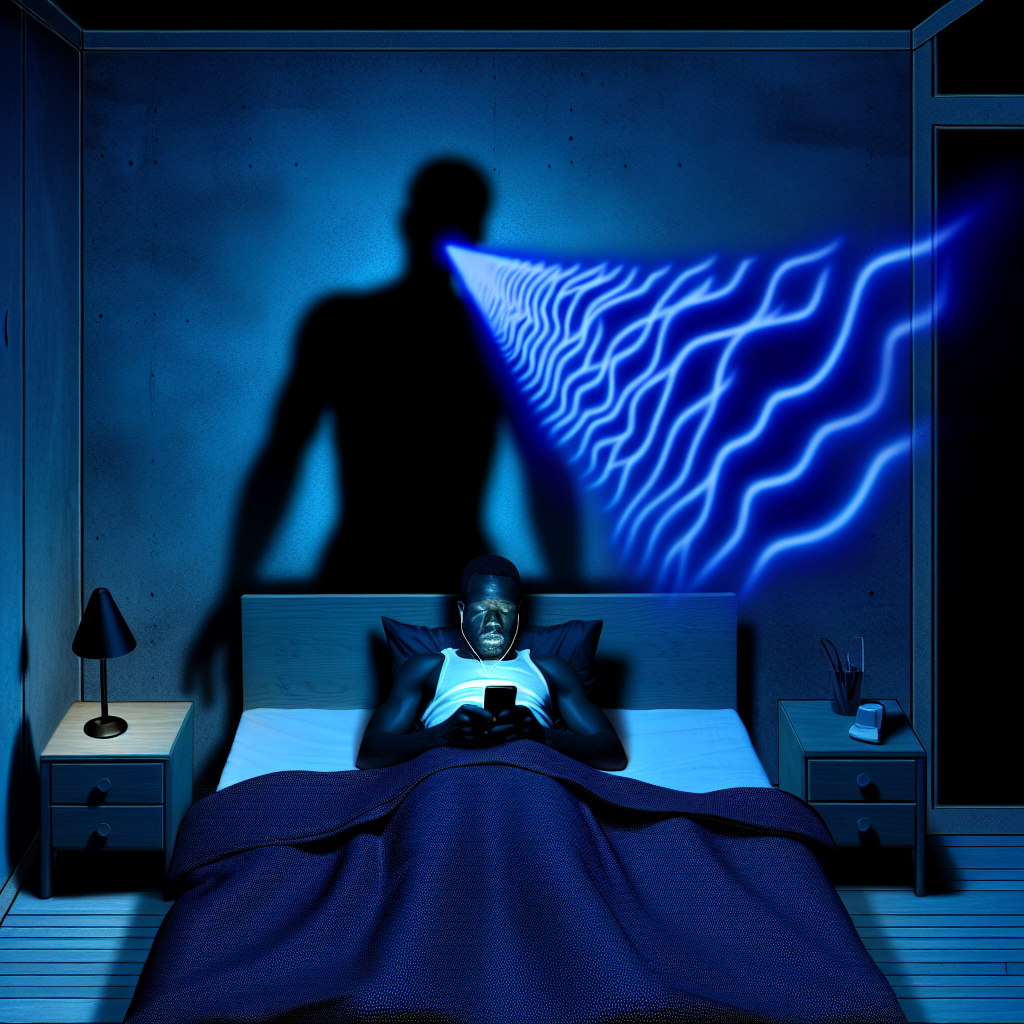
The Silent Sleep Killer: Why Using Phones in Bed Is Hurting You
In today’s always-connected world, checking social media, watching shows, or answering emails from bed might feel like self-care. But that bedtime scroll could be sabotaging your sleep, mood, and health. A harmful trio—blue light, electromagnetic fields (EMFs), and elevated cortisol levels—can wreak havoc on your natural sleep cycle.
Experts are sounding the alarm on what’s now referred to as the “Phone-in-Bed Problem.” According to the Pew Research Center (2023), 89% of adults use their phones within 30 minutes before bed, often unaware of the negative consequences.
Let’s explore how this nightly habit undermines your rest—and simple ways to reverse the cycle.
Blue Light Exposure: Tricking Your Brain Into Staying Awake
The vibrant glow of your device may be convenient, but it sends the wrong signal to your brain. Screens emit large amounts of blue light, a high-energy visible (HEV) light that closely resembles natural daylight.
“Blue light tells your brain it’s still daytime, even at midnight, which delays the release of melatonin—your body’s sleep hormone,” explains Dr. Elsie Moore, a sleep specialist. “This shift affects your circadian rhythm and makes it harder to fall asleep.”
Harvard Medical School found that blue light suppresses melatonin twice as effectively as other types of light. As a result, nighttime screen users often experience:
– Difficulty falling asleep
– Fragmented and lighter sleep
– Shortened REM cycles
A 2019 study published in the Journal of Clinical Sleep Medicine revealed that blue light exposure before bedtime reduces total sleep time by 16% and delays melatonin production by up to 90 minutes.
For instance, scrolling your phone at 10:30 p.m. could delay your body’s sleep cues until midnight—resulting in impaired performance the following day.
What You Can Do
To mitigate blue light’s effects:
– Turn on “Night Mode” on your phone or use a blue light filter like f.lux
– Avoid screens at least one hour before bedtime
– Read a physical book or wear amber-tinted glasses designed to block blue light
EMF Radiation: The Invisible Sleep Disruptor
Unlike blue light, electromagnetic fields (EMFs) aren’t visible—but their impact can be just as significant. Electronic devices emit low-level EMFs in the form of radiofrequency radiation. Though health authorities like the WHO label them “likely safe” in small amounts, growing studies suggest long-term or close-range exposure—such as sleeping beside a phone—can interfere with sleep quality.
A 2021 report in Environmental Health linked sustained EMF exposure during sleep hours to:
– Poor sleep quality
– Increased oxidative stress
– Disruption of melatonin production
“Even if your phone isn’t being used, it still emits intermittent EMFs while searching for network signals,” says Dr. Daniel Cramer, a neurologist and environmental health expert. “Keeping your phone by your pillow all night can subtly disturb deep sleep cycles.”
Think of your brain as a radio tuning into slow-wave sleep. EMFs act like static, distorting rest without obvious signs.
How to Reduce EMF Exposure at Night
Simple ways to limit EMF interference:
– Charge your phone across the room—or outside your bedroom
– Switch your device to airplane mode before bed
– Avoid sleeping with your phone under your pillow or blanket
For a healthier wake-up, try using a traditional alarm clock or a sunrise-simulation light that nudges you awake with gradual brightness.
Cortisol Overload: Stress and Screens Don’t Mix
Screens don’t just strain your eyes—they also stimulate your stress response. Cortisol, the hormone responsible for managing stress, should drop down at night to allow for restful sleep. But digital distractions—especially emotionally charged news or messages—can keep cortisol levels high, increasing nighttime anxiety.
Dr. Michelle Drerup, a sleep expert at Cleveland Clinic, cautions: “Even one emotional text or a breaking news alert can activate the brain’s stress response and delay your ability to sleep.”
The American Psychological Association reports that 71% of Americans feel emotionally exhausted after consuming the news—particularly right before bed.
Consider these stress triggers:
– Reading work emails that spark anxiety
– Doomscrolling through negative headlines
– Watching intense or emotional content
Even brief exposure to emotionally charged posts can create micro-surges in cortisol, making it hard for your mind to wind down.
Ways to Lower Cortisol Before Bed
Combat nighttime stress with calming alternatives:
– Set a tech-free hour before bedtime
– Replace scrolling with tea, meditation, journaling, or light yoga
– Use sleep-focused apps like Calm’s “Sleep Stories” or ambient nature sounds on Spotify
The Triple Threat: How Blue Light, EMFs, and Stress Combine
Each of these factors—blue light, EMFs, and cortisol surges—can independently disturb your sleep. But together, they create a perfect storm that can erode your rest night after night.
Imagine this scenario: You’re in bed at 10:30 p.m. and start scrolling through your phone.
– Blue light delays melatonin and confuses your sleep-wake rhythm
– A work email raises stress, increasing cortisol
– Your phone, placed beside your pillow, emits EMFs all night
The outcome: You toss and turn, miss deep REM cycles, and wake feeling groggy and disoriented. Repeated episodes like this can lead to serious long-term impacts on your health.
The Sleep Foundation warns that sleep deprivation increases your risk for:
– Mood disorders such as anxiety and depression
– Obesity and type 2 diabetes
– Heart disease and poor immune function
“As sleep quality erodes over time, the damage goes far beyond feeling tired,” says Dr. Matthew Walker, author of Why We Sleep. “You begin to compromise your mental clarity, emotional health, and physical resilience.”
Reclaim Your Rest: Easy Steps to Better Sleep
You don’t have to eliminate all screen time to improve your sleep—but consistent changes matter. Try these proven ways to restore your nighttime routine:
1. Replace the Scrolling Habit
Instead of reaching for your phone, try:
– Deep breathing exercises
– Reading a printed book
– Writing in a gratitude journal
Just 10 minutes of calming activities can shift your body into rest mode.
2. Create a Screen-Free Sleep Zone
Set up healthier boundaries by:
– Charging your devices outside the bedroom
– Removing screens from your nighttime environment
– Saying no to using phones as sleep aids
3. Use Technology Mindfully
If screen use is unavoidable:
– Install apps like f.lux to reduce blue light
– Enable “Night Mode” on all devices during evening hours
– Use productivity tools like Forest to minimize distractions and promote mindfulness
4. Stick to a Consistent Sleep Schedule
Aim to sleep and wake at the same time every day—including weekends. A consistent rhythm strengthens your internal clock, leading to improved sleep quality and daytime mood.
The Bottom Line: Sleep Is Worth Protecting
It might seem harmless to scroll, stream, or check email in bed—but the science shows otherwise. The combination of blue light, EMF exposure, and elevated nighttime stress creates a harmful cycle that steals restorative sleep and slowly undermines your health.
The good news? You have control. By disconnecting from your devices and embracing restful rituals, you take a vital step toward better sleep, stronger immunity, sharper focus, and emotional balance.
Let your nights be the foundation for healthier, more energized days.
Sleep better. Live brighter.
Sources:
– Harvard Medical School – Blue light and its impact on sleep
– Environmental Health – EMF exposure and sleep disruption
– Pew Research Center – Technology and bedtime habits
– Journal of Clinical Sleep Medicine – Effects of blue light on melatonin
– American Psychological Association – Stress and digital media
– Cleveland Clinic – Cortisol’s role in sleep quality
– Sleep Foundation – Consequences of poor sleep
– Why We Sleep by Dr. Matthew Walker
– eDrugstore.com – Digital wellness tools and resources